Trust wallet app is a mobile self-custody wallet for Web3 assets
Self-custody multi-chain crypto wallet for holding Web3 assets on mobile, with in-app staking for network rewards on supported coins.
Trust wallet app is a mobile self-custody wallet for people who want one place to hold crypto, swap tokens, stake supported assets, view NFTs, and open Web3 services from a phone. It gives the owner control of the recovery phrase and private keys, supports many networks and tokens, and pairs everyday portfolio tools with DeFi, NFT, real-world asset, perpetuals, and prediction market access inside a mobile-first interface.
The mobile wallet layer behind swaps, staking, and NFTs
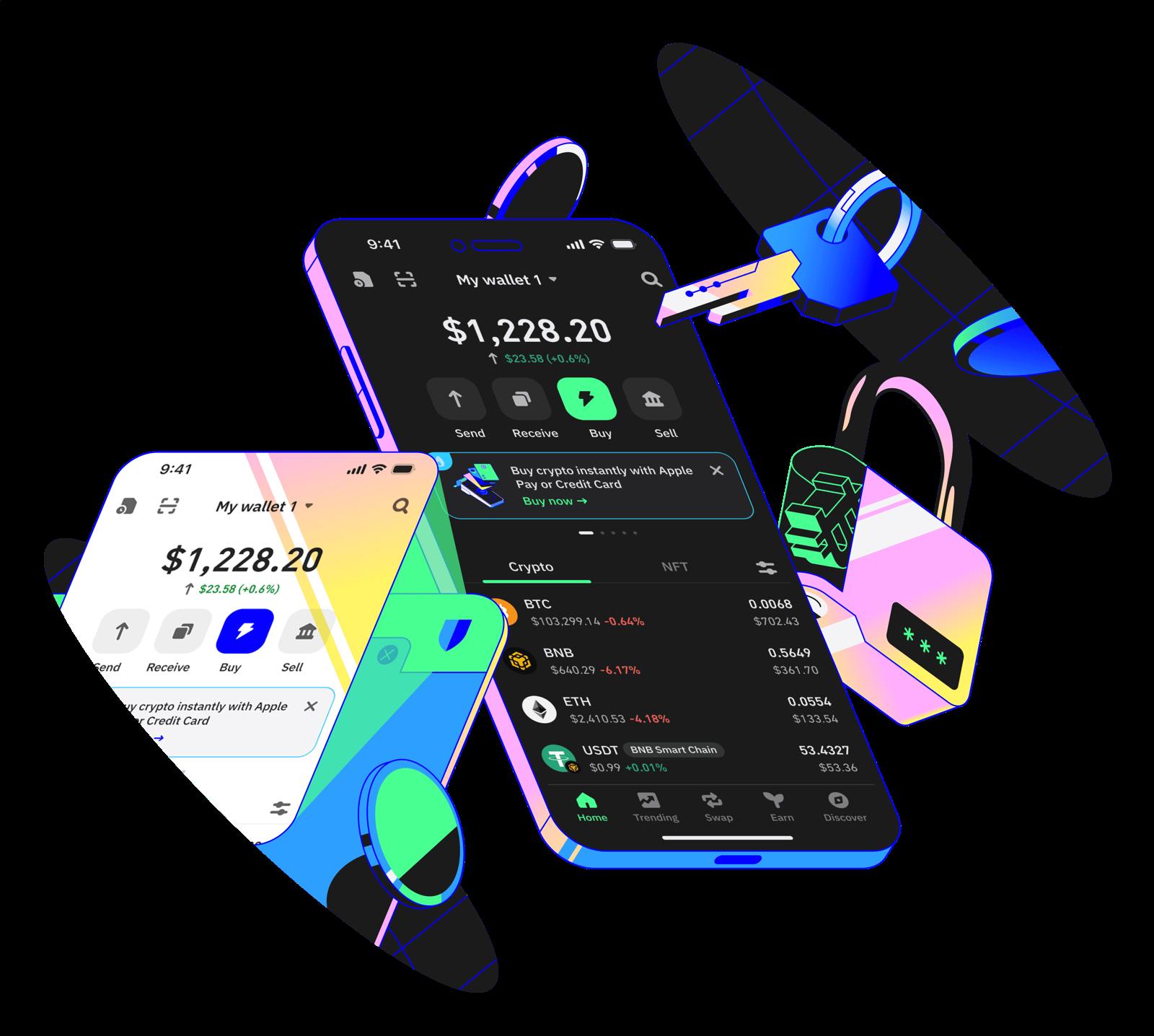
The app works as the phone-based entry point for the broader Trust Wallet ecosystem. A user creates or imports a wallet, protects it with a recovery phrase, and then manages assets across supported chains from the same home screen. The point is practical: balances, receive addresses, send flows, token discovery, swaps, staking menus, NFT views, and Web3 browsing belong in one workflow instead of scattered across separate exchange and explorer tabs.
Trust wallet app also connects to features that now extend beyond simple coin storage. Its official feature set includes mobile wallet access, a browser extension for desktop use, swaps, staking, NFT handling, crypto purchases, SWIFT smart contract wallet features, tokenized real-world assets, perpetual futures, and prediction markets. That mix places it closer to a Web3 control panel than a single-purpose Bitcoin wallet.
How self-custody changes the way the app works
Self-custody is the core design choice. The wallet owner holds the recovery phrase that controls the accounts. Transactions are signed from the wallet, and the app presents the send, approve, swap, and staking screens that lead to on-chain activity. This model gives direct ownership of assets and also makes recovery phrase storage the most important operational habit.
A recovery phrase deserves physical, private storage because it unlocks the wallet on another device. Screenshots, cloud notes, email drafts, and pasted chat messages create obvious weak points. The strongest everyday setup separates spending activity from long-term holdings: keep routine DeFi interactions in a smaller hot wallet and reserve larger balances for a more isolated storage method.
Where multi-chain support matters on a phone
On a practical level, Trust wallet app is built for users who move across more than one network. A portfolio might include Bitcoin, Ethereum assets, BNB Chain tokens, stablecoins, NFTs, and staking coins. The mobile interface reduces the friction of checking balances and receiving assets across chains, while still requiring the user to choose the correct network before sending funds.
That network choice matters because crypto addresses and token symbols do not tell the whole story. USDT, USDC, ETH, BTC, BNB, SOL, AVAX, TRX, and other assets appear in different ecosystems with different transaction fees and confirmation behavior. The app helps display assets and routes actions, but the sender still chooses the destination chain and approves the final transaction.
Swaps and buying crypto inside the wallet
In-app swaps are useful when the desired trade is simple and the asset already sits in the wallet. The swap screen brings token selection, route information, quoted output, network fees, and confirmation into a single mobile flow. The actual cost comes from the market price, spread, liquidity, routing, and gas on the chain used for settlement.
That said, Trust wallet app also includes buy-crypto access for users who want to add funds with a card or local payment provider where supported. That purchase path is separate from a decentralized swap: a third-party on-ramp handles the payment flow, identity checks, available currencies, and payment fees. Once purchased assets arrive on-chain, they appear in the wallet like other tokens.
Staking rewards from supported networks
Staking in the wallet is tied to networks that use delegated or native staking. The user selects a supported coin, reviews the staking terms shown in the interface, chooses an amount, and confirms the transaction. Rewards come from the network mechanism rather than from the app inventing a separate yield product.
The important details are the validator or delegation model, bonding and unbonding periods, reward rate movement, and chain fees. Some assets require a waiting period before funds return to liquid status. Trust wallet app keeps the staking workflow accessible on mobile, while the chain rules decide when rewards accrue and when unstaked assets become transferable.
NFT viewing and Web3 browsing from the same account
NFT support gives the wallet a visual layer for collectibles and on-chain items. The app displays compatible NFTs tied to the wallet address, so users track artwork, game items, membership tokens, and other tokenized objects alongside fungible balances. This is especially valuable when the same address interacts with marketplaces, games, or membership apps.
The Web3 browser experience extends that wallet account into decentralized applications. When a dApp requests a connection or transaction approval, the app becomes the signing surface. Reading every approval screen is essential because token approvals grant defined permissions, and a malicious approval drains assets even when the recovery phrase stays private.
SWIFT smart accounts and newer Web3 features
More broadly, Trust Wallet lists SWIFT as its smart contract wallet experience, using account abstraction features to make Web3 access smoother. Smart account design focuses on more flexible wallet operations than a basic externally owned account, including app-level improvements around how users interact with transactions and wallet actions.
The product lineup also points to tokenized real-world assets, perpetual futures, and prediction markets in self-custody. Those features speak to a broader mobile finance interface: the wallet is no longer only a storage screen, because it also surfaces markets, data, and transaction flows for users who already understand the risks of on-chain products.

Getting set up without losing the recovery path
A clean setup starts with downloading the app from the official app store listing for the device, creating a new wallet, recording the recovery phrase offline, and enabling the phone's local lock features. After that, the first test should be small: receive a modest amount, send a small transaction, and confirm that the user understands the selected network and fee.
Day to day, Trust wallet app becomes easier to manage when accounts are named by purpose. One account might handle everyday swaps, another might hold NFTs, and a separate wallet might stay away from experimental dApps. That separation keeps approvals, browser activity, and higher-value storage from blending into one address history.
Alternatives that solve different wallet problems
Different wallets emphasize different ecosystems. MetaMask is common for Ethereum and EVM networks and has a mature browser-extension workflow. Phantom is known for Solana and also supports a broader multi-chain experience. Coinbase Wallet gives self-custody access with strong exchange-adjacent recognition. Ledger Live pairs with Ledger hardware for users who want private keys held on a dedicated signing device.
Importantly, Trust wallet app stands out when the priority is a broad mobile wallet with swaps, staking, NFTs, market tools, and multiple Web3 product surfaces under the Trust Wallet brand. It is strongest as a phone-first hub for active self-custody users rather than a purely cold-storage setup.
Trust wallet app - common questions
- Why do some tokens not appear after receiving them?
- A token might be on a network that is hidden in the asset list, unsupported in the display view, or represented by a contract the app has not auto-detected. Adding the token contract on the correct chain often reveals the balance. The network must match the chain used for the transfer; the same ticker on another chain is a different token record.
- Is a hardware wallet still useful if I use the Trust Wallet mobile app?
- A hardware wallet is useful for larger balances or assets that do not need frequent dApp interaction. The mobile app is convenient for active swaps, NFTs, staking, and Web3 browsing, while dedicated signing hardware reduces exposure for long-term holdings. Many users separate these roles so routine activity and higher-value storage do not share the same hot wallet.
- Does the Trust Wallet mobile app charge its own fee for sending crypto?
- Network transfers require blockchain fees paid to the network validators or miners for the chain being used. The wallet interface shows the fee before confirmation, and the fee asset changes by network, such as ETH on Ethereum or BNB on BNB Chain. Swaps and purchases also include routing, liquidity, spread, provider, or payment costs shown during the transaction flow.
- Which phones support the Trust Wallet mobile app?
- The mobile app is built for iOS and Android devices, with downloads available through the major app stores. The exact device requirements change as operating systems age, so an older phone needs enough current OS support to install and update the app. Biometric lock, screen lock, and secure device storage improve the day-to-day wallet experience.