Trust wallet app is self-custody access to multi-chain Web3
Self-custody multi-chain crypto wallet for storing assets, swapping tokens, staking crypto, and using NFTs across Web3.
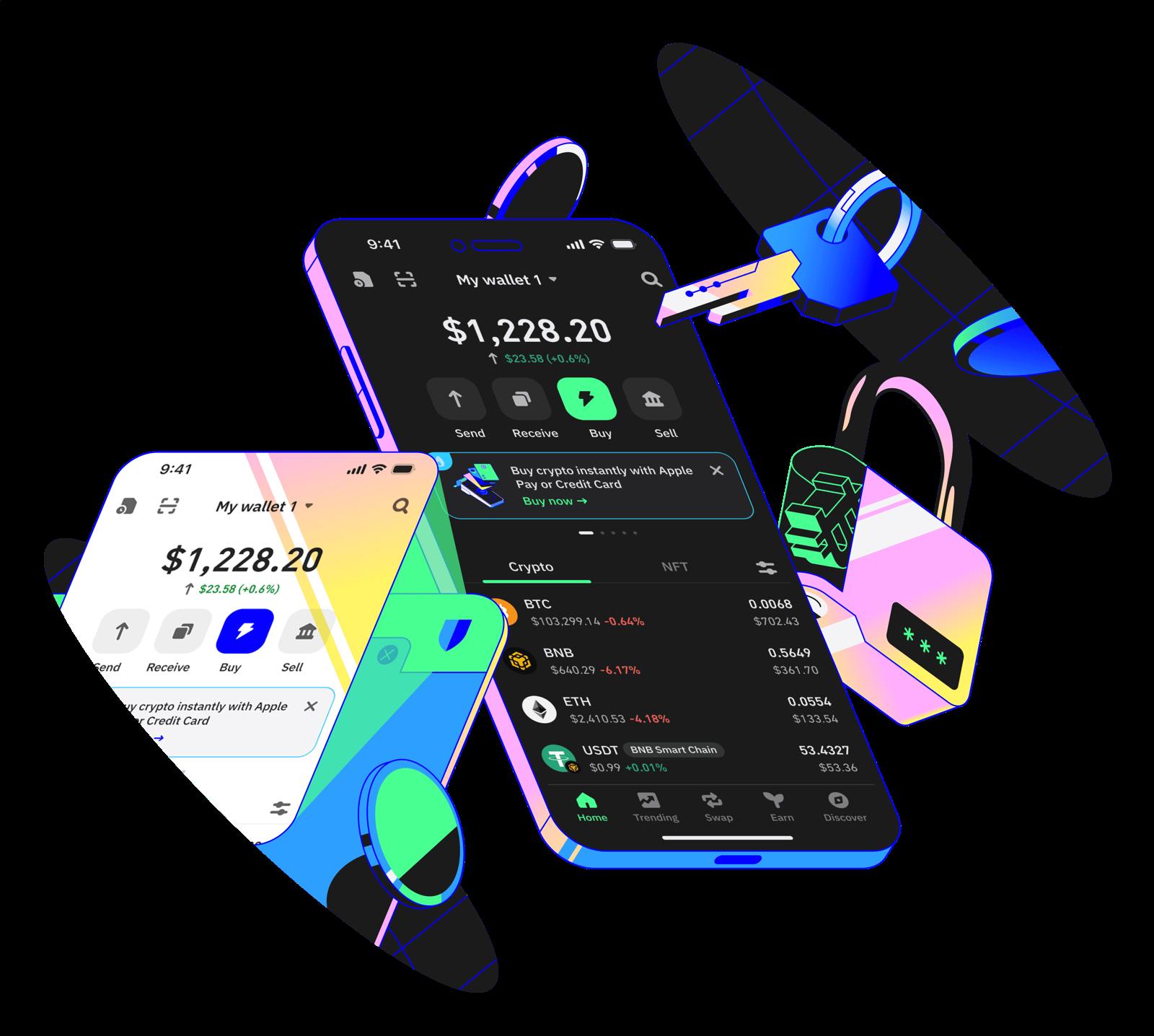
Trust wallet app is a self-custody wallet for holding private keys, managing crypto across many networks, swapping tokens, staking supported assets, viewing NFTs, and opening Web3 apps from mobile or desktop. It puts ownership controls on the user's device instead of a custodial account, so the recovery phrase and transaction approvals matter. The wallet is best understood as a secure control panel for Bitcoin, Ethereum, BNB Smart Chain, Solana, Polygon, and other crypto ecosystems.
Multi-chain storage without separate wallet accounts
The main appeal is breadth. A single installation gives users a place to manage coins, tokens, collectibles, and Web3 connections across a large set of chains. That matters because crypto activity rarely stays inside one network. A person might hold BTC as a long-term asset, use ETH for DeFi, keep SOL for fast transfers, and interact with BNB Smart Chain tokens from the same phone.
Trust wallet app keeps the experience familiar while the networks underneath remain separate. Each chain has its own address format, fee token, confirmation behavior, and risk profile. The app organizes those differences into asset pages, transaction screens, token balances, and approval prompts, so the user sees what they are signing before a transfer, swap, staking action, or NFT interaction leaves the device.
How swaps route through chains and liquidity
Swaps inside the wallet connect a user's selected asset to available liquidity on the relevant network. The screen shows the token pair, expected output, price movement, and the network fee before the user signs. On Ethereum, gas is paid in ETH; on BNB Smart Chain it is paid in BNB; on Polygon it is paid in POL. The wallet does not erase network economics, but it brings the quote and approval flow into one interface.
This is useful for simple moves such as exchanging BNB for a BEP-20 token, converting ETH-based assets, or repositioning a portfolio before using a dApp. Slippage settings deserve attention on volatile or thinly traded pairs. A quote that looks acceptable at the preview stage becomes a different result if liquidity shifts before the transaction confirms.
Staking and rewards inside the same wallet
Staking is available for supported proof-of-stake assets, letting holders delegate or participate from the wallet rather than moving funds to an exchange account. The exact reward rate, lockup period, validator rules, and unstaking delay are set by each network. That makes staking a network-specific action, even when the button appears in the same app as swaps and transfers.
On a practical level, Trust wallet app presents staking as part of asset management rather than a separate investment dashboard. The user chooses an eligible asset, reviews the staking terms shown for that chain, signs the transaction, and tracks rewards from the wallet. Assets such as BNB, TRX, ATOM, and other supported tokens have their own mechanics, so the important details are the validator, fee, reward source, and withdrawal timing.
NFTs, RWAs, perps, and prediction markets in the wallet view
The product has moved beyond basic storage. NFT support gives users a place to view collectibles and interact with marketplace-related activity. Tokenized real-world assets bring on-chain representations of off-chain instruments into the same self-custody environment. Perpetual futures and prediction market access extend the app toward active Web3 participation, including integrations around venues such as Polymarket, Predict.fun, and Hyperliquid.
Those advanced areas raise the importance of reading transaction prompts. A collectible transfer, a perpetual futures trade, and a prediction market position are different commitments. The same wallet approval pattern sits in front of each one, so the user's job is to recognize the asset, chain, contract, and amount before signing.
Mobile app, browser extension, and SWIFT smart accounts
That said, Trust Wallet works as a mobile app and as a browser extension. The mobile version suits everyday transfers, QR-based receiving, staking checks, and asset monitoring. The desktop extension fits browser-based dApps, DeFi dashboards, NFT marketplaces, and workflows where a wider screen makes contract details easier to inspect.
SWIFT, Trust Wallet's smart contract wallet experience, adds account abstraction features to make Web3 actions feel less rigid than traditional externally owned accounts. Account abstraction changes how wallet logic handles authorization and execution, giving products room for features such as smoother onboarding and more flexible transaction handling. The important distinction is that smart accounts are a wallet architecture choice, while the self-custody principle still depends on user-controlled access.
Setting up the wallet for the first time
A new user starts by installing the official mobile app or browser extension, creating a wallet, and recording the recovery phrase in a private offline location. After setup, the next step is adding assets, choosing the right network before receiving funds, and sending a small first transfer when using a new chain or address format.
- Confirm the network before copying a receive address.
- Keep enough native gas token for future transactions.
- Review token approvals before connecting to dApps.
- Use the browser extension for complex DeFi screens.
- Separate long-term holdings from experimental Web3 activity.
More broadly, Trust wallet app becomes easier to use when each chain is treated as its own rail. Sending USDT on Ethereum, Tron, or BNB Smart Chain involves different fees and addresses even though the token symbol looks familiar. The app helps display the context, while the user's selection decides where the transaction goes.
Privacy, security, and transaction approval habits
Self-custody means the wallet signs transactions from the user's device. Biometric locks, passcodes, and local security settings reduce everyday exposure, while the recovery phrase remains the master backup. Anyone who obtains that phrase controls the wallet, so screenshots, cloud notes, shared documents, and messaging apps are poor storage places for it.
Security also depends on approval discipline. A dApp connection is a permission relationship, and a token approval gives a contract authority over a specific asset allowance. Before confirming, users should check the network, contract action, token amount, destination address, and any unlimited spending request. Trust wallet app makes these prompts visible; good outcomes come from treating them as transaction documents rather than pop-ups to dismiss.

Where MetaMask, Coinbase Wallet, and Ledger Live fit beside it
Day to day, Trust wallet app is strongest for users who want wide chain coverage, mobile-first convenience, and a direct path into swaps, staking, NFTs, and newer Web3 markets. MetaMask remains deeply associated with Ethereum Virtual Machine networks and browser dApp use. Coinbase Wallet appeals to users who want a separate self-custody wallet connected to a familiar exchange brand. Ledger Live pairs software management with Ledger hardware signing for people who prioritize offline key storage.
The right choice follows the workflow. Heavy DeFi users on Ethereum and Layer 2 networks compare dApp compatibility first. Mobile users who move between many ecosystems value chain coverage and asset discovery. Long-term holders place more weight on recovery storage, hardware support, and fewer routine approvals. Many experienced users keep more than one wallet so routine activity and cold storage stay separate.
Who gets the most value from this wallet
It serves users who want one interface for day-to-day crypto ownership rather than separate tools for every chain. A beginner gets a recognizable app layout, visible balances, simple receiving screens, and built-in purchase access. An active Web3 user gets dApp connections, swaps, NFTs, staking, market data, and browser extension support without rebuilding their workflow around a single blockchain.
Importantly, Trust wallet app also has a developer side through Wallet Core, an open-source, mobile-focused wallet library, and resources for teams that want to get dApps or assets in front of wallet users. That ecosystem role matters because the wallet is both a consumer product and a distribution surface for Web3 activity. Its usefulness comes from combining custody, chain access, and transaction signing in one place.
What to know about Trust wallet app
- Does Trust Wallet charge a fee to install or create a wallet?
- The app is free to install and creating a wallet does not require a subscription. Users still pay blockchain network fees when sending assets, swapping tokens, staking, minting, claiming, or interacting with dApps. Those fees go to the network validators or miners, not to a wallet balance inside the app. Some in-app services, such as buying crypto or swapping through providers, include provider or liquidity costs in the quoted transaction.
- Which devices work with the Trust wallet app?
- It is available as a mobile wallet for iOS and Android, and Trust Wallet also offers a browser extension for desktop Web3 use. The mobile app fits QR codes, transfers, staking, and balance checks, while the extension is useful for browser-based DeFi and NFT sites. Users should keep each installation secured with device-level protection and preserve the recovery phrase outside the device.
- Can I recover my wallet if I lose my phone?
- Yes, recovery works when the user has the correct recovery phrase for that wallet. Installing the app on a new device and importing the phrase restores access to the same addresses and assets supported by the wallet. Without the phrase or private key material, the wallet cannot be restored through an email reset or customer support process, because self-custody access is controlled by cryptographic keys.
- What happens if I send crypto on the wrong network?
- The outcome depends on the asset, destination, and chain. Some transfers reach an address the user controls on another compatible network, while others land where the receiving service does not support that token or chain. Recovery is then difficult or impossible without help from the receiving platform. Before sending, match the token standard and network shown by the sender and receiver, such as ERC-20, BEP-20, TRC-20, or SPL.
- Is the Trust wallet app suitable for NFTs?
- Yes, the wallet includes NFT viewing and Web3 connection features for supported chains and marketplaces. It is useful for holding collectibles, reviewing ownership, and signing marketplace interactions from mobile or desktop. NFT users still need to inspect approvals carefully, because listing, transferring, minting, and accepting offers involve different contract permissions. The safest routine is to check the collection, network, contract action, and wallet address before signing.
- Do I need native tokens before using dApps?
- Yes, most chains require their native gas token before a transaction confirms. ETH pays gas on Ethereum, BNB pays gas on BNB Smart Chain, SOL pays fees on Solana, and POL pays fees on Polygon. A wallet may show token balances, but transfers, approvals, swaps, and staking actions still need the chain's fee asset. Keeping a small gas balance prevents failed actions when using dApps.