Trust wallet app is a SWIFT-enabled mobile wallet for self-custodied Web3 access
Self-custody multi-chain crypto wallet for managing Web3 assets on mobile, with SWIFT smart contract wallet account abstraction.
Trust wallet app is a mobile self-custody crypto wallet built for holding coins, tokens, NFTs, and DeFi positions across many blockchain networks, with SWIFT smart contract wallet features adding account abstraction to the experience. The app puts private-key control on the user's device while connecting to swaps, staking, tokenized real-world assets, perpetual futures, prediction markets, and decentralized applications from one mobile interface.
The SWIFT smart contract wallet layer changes the first wallet session
The distinctive part of the current Trust Wallet experience is SWIFT, its smart contract wallet path for easier Web3 use. Traditional wallets ask the user to manage every chain interaction as a raw signing moment: choose a network, hold the right gas token, approve a transaction, and hope the app has interpreted the contract call clearly. SWIFT brings account abstraction into that flow so a wallet account behaves more like programmable wallet infrastructure than a plain externally owned address.
That matters for new users because the app has to bridge two worlds. Crypto still runs on chains with gas fees, confirmations, permissions, and irreversible transfers. A modern mobile wallet has to make those mechanics legible without hiding the custody model. Trust wallet app keeps the ownership model centered on the user while using smart account design to reduce friction around common actions.
What the mobile app actually holds and displays
The wallet tracks assets rather than storing coins inside a company account. Bitcoin, Ethereum, BNB Smart Chain assets, Solana tokens, Polygon assets, NFTs, staking positions, and other supported networks exist on their own blockchains. The app reads balances, prepares transactions, and signs instructions with keys controlled from the wallet. When a user receives funds, the address receives them on-chain; when a user sends, swaps, or stakes, the app creates a signed transaction for that network.
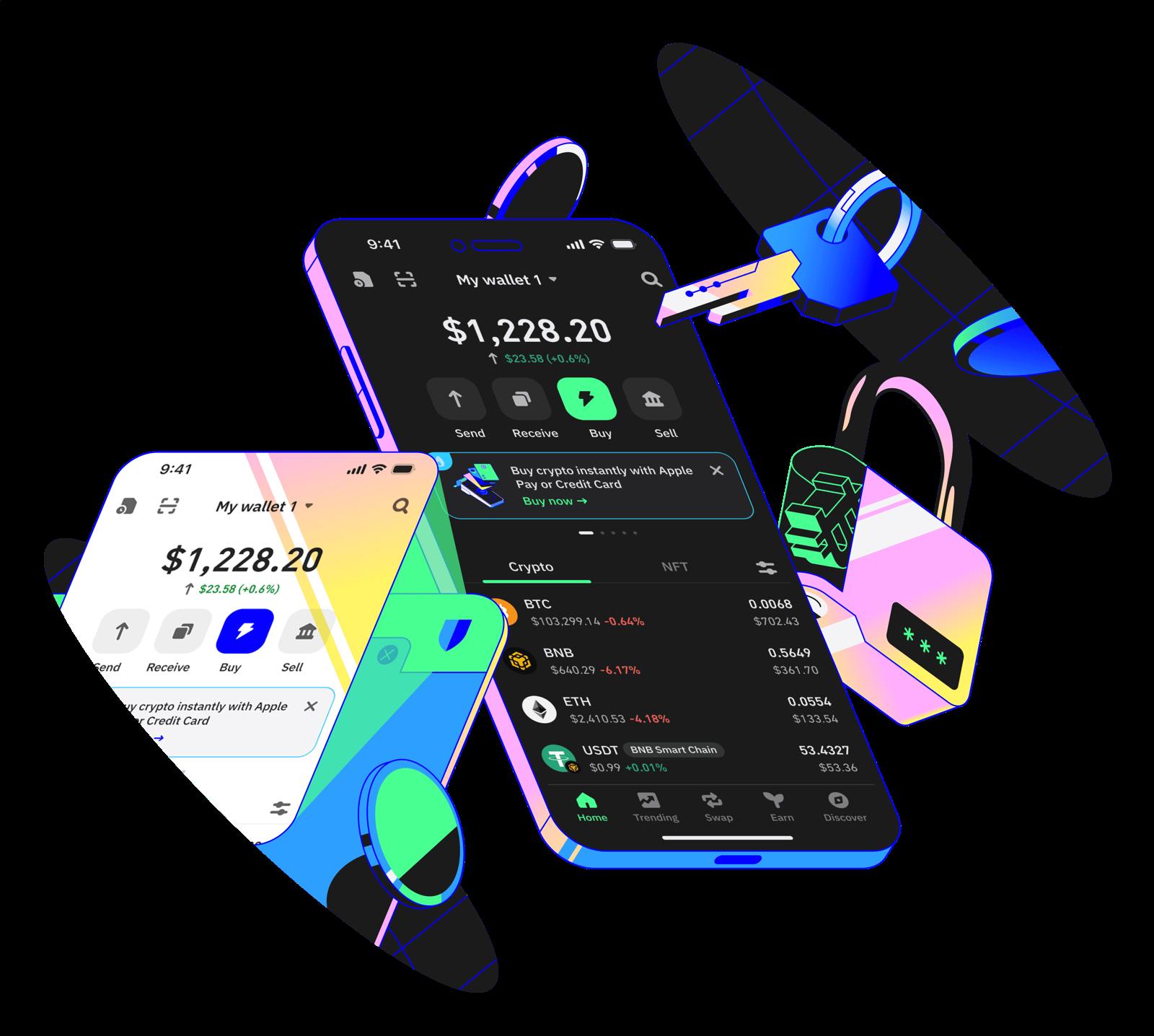
Trust wallet app also functions as a portfolio screen. It shows live prices, market data, token balances, NFT items, and Web3 activity in a format built for a phone. That combination is important because users do not want one app for prices, another for NFTs, another for staking, and another for dApps. The appeal is a single control surface for everyday on-chain activity.
How swaps, staking, and dApps fit inside one screen
Swaps route crypto trades from inside the wallet interface, so the user does not have to move assets to a centralized exchange for every token exchange. The transaction still uses blockchain settlement and requires review before signing. The wallet displays the token pair, route information, quoted output, and network fee so the user sees what they are approving before the transaction leaves the device.
Staking uses a different pattern. On supported proof-of-stake networks, the app lets users delegate assets to help secure the network and receive protocol rewards. The exact lock-up rules, validator choices, reward timing, and unstaking delays belong to each chain. That is why staking a token such as BNB, SOL, or another supported asset is more than tapping an earn button; the wallet is an interface to the chain's native staking rules.
The browser and dApp connection features bring DeFi protocols, NFT marketplaces, and on-chain applications into reach. Trust wallet app signs connection requests and transactions, but the protocol being used defines the smart contract logic. Reviewing token approvals matters most when a dApp asks for permission to spend assets from an address.
Starting from download to first funded address
A new wallet setup begins with installing the official mobile app for iOS or Android, creating a wallet, and recording the recovery phrase exactly as shown. A recovery phrase is the emergency access method for the wallet; losing it means losing the practical path back to the account after a phone loss or app reinstall. Anyone who sees the phrase gains the power to restore the wallet elsewhere.
After setup, the user chooses the chain and asset they want to receive, copies the address, and sends a small test amount before transferring a larger balance. That test step catches wrong-network mistakes, which remain one of the most expensive wallet errors. Trust wallet app supports many chains, so the token symbol alone never tells the whole story; USDT on Ethereum, Tron, BNB Smart Chain, and other networks uses different addresses and fee rules.
- Install the mobile app from the intended app store listing.
- Create or import a wallet and secure the recovery phrase offline.
- Select the exact network before copying a receive address.
- Send a small test transaction when using a new chain or address.
- Review every swap, staking, and dApp transaction before signing.
Where account abstraction helps most
Account abstraction is most useful when the wallet experience would otherwise be blocked by gas-token management or repetitive signing friction. Smart contract wallet design lets the account include programmable rules and smoother transaction handling. In plain terms, it makes the wallet account more flexible than a basic key-address pair while preserving the idea that the user controls the wallet.
On a practical level, Trust wallet app uses this direction to make Web3 feel less fragmented. The benefit is clearest when a user moves among DeFi, NFTs, token transfers, and app connections without needing to understand every low-level chain detail first. It does not erase blockchain costs or smart contract risk; it makes the path through those mechanics more usable on a phone.
Buying crypto, prices, and conversion tools inside the wallet
The app includes buy-crypto access through integrated payment providers, plus price views and a currency converter. These features serve a practical role: a user checking a balance often wants to know the fiat value, compare market movement, or add funds without leaving the wallet. Provider availability, payment methods, and fees differ by region and asset, so the quote screen is the source of truth before purchase.
For portfolio management, live market data turns the wallet into a watch screen as well as a signing tool. That is useful for people who hold assets across several networks, because the balance view has to normalize different token standards and chain units into a readable account picture.
NFTs, tokenized real-world assets, and newer market access
NFT support means the app can display collectibles and other tokenized items associated with the wallet address. A wallet-level NFT view matters because NFT ownership is chain-based; the asset is tied to an address, and the app presents the metadata and collection details. This turns the phone into a gallery and transaction tool for supported NFT networks.
That said, Trust Wallet's official materials also describe tokenized real-world assets, perpetual futures, and prediction market access as part of its expanding self-custody Web3 surface. Those features point to a broader direction: the wallet is no longer only a place to send and receive coins. It is becoming a front door to on-chain markets where the user signs actions directly from a self-custodied account. Trust wallet app users should treat leveraged products and prediction markets as advanced tools because their risk comes from the market structure as well as wallet operation.
Privacy and security depend on device habits too
Self-custody gives the user control over keys, but the phone becomes part of the security boundary. Screen locks, operating system updates, phishing resistance, and recovery phrase storage all influence the safety of the wallet. A clean recovery phrase backup matters more than any app setting because it determines whether the wallet survives a damaged or replaced phone.
The highest-risk moments are predictable: importing a phrase into an unfamiliar app, approving unlimited token allowances, following a fake support message, or signing a transaction that has not been read. Trust wallet app reduces some friction in the interface, yet the signature remains the decisive act. Once a valid transaction reaches the chain, reversal is not part of the normal settlement model.
When another wallet type fits the job better
A mobile hot wallet is strongest for daily Web3 activity, smaller active balances, NFT viewing, staking management, and dApp access. Long-term cold storage belongs in a hardware wallet such as Ledger or Trezor when the priority is keeping signing keys away from an internet-connected phone. A desktop extension wallet such as MetaMask fits users who spend most of their time in browser-based DeFi. Phantom is a common choice for people focused heavily on Solana applications.
That does not make one wallet category universally superior. The right setup separates purposes. Trust wallet app works well as a mobile command center for multi-chain activity, while a hardware wallet works well as a vault for assets that rarely move. Users who stake on specialized networks also need to understand each chain's recovery paths, derivation behavior, and unstaking rules before relying on a single interface for high-value positions.

The clearest use case is controlled mobile access to Web3
The strongest reason to use the app is the combination of self-custody, multi-chain support, and mobile-first access to Web3. It brings assets, swaps, staking, NFTs, price data, smart contract wallet features, and newer on-chain market categories into one interface without turning the user's holdings into an exchange balance. That is the core distinction: the app is a signer and Web3 interface for assets that remain tied to blockchain addresses.
For someone entering crypto through a phone, Trust wallet app provides a broad starting point. For an experienced user, it offers a portable way to monitor assets, connect to dApps, move funds, and test smart account features. The best experience comes from matching the wallet to the task: active Web3 use in the mobile app, larger long-term reserves in colder storage, and careful transaction review before every signature.
Frequently asked questions about Trust wallet app
- Does the Trust wallet app charge its own fee for sending crypto?
- Network transfers require blockchain gas or transaction fees, and those fees go to the network validators or miners rather than being stored inside the wallet balance. The amount changes by chain, congestion, and transaction type. Swaps and buy-crypto flows also show quoted costs from routes or payment providers before confirmation, so the review screen is the place to check the full cost.
- Can I use the Trust wallet app without creating an exchange account?
- Yes. A self-custody wallet setup creates or imports wallet keys directly in the app, so basic receiving, holding, sending, and dApp signing do not require a centralized exchange login. Buying crypto with card or local payment methods uses integrated providers that set their own region, identity, and payment requirements. Those purchase rules are separate from the wallet's core self-custody function.
- Which phones support the Trust wallet app?
- The mobile wallet is built for iOS and Android devices. The exact operating system requirements change as app versions update, so users with older phones should check the current app store compatibility before installing. Security is strongest on a device that still receives operating system patches, uses a strong screen lock, and avoids untrusted keyboard, backup, or remote-access apps.
- Recovering access if a phone with the wallet is lost
- Recovery depends on the wallet backup, not on possession of the old phone. With the correct recovery phrase, the wallet can be restored in a compatible wallet app and the addresses can be accessed again. Without that phrase, deleting the app, losing the device, or breaking the phone removes the practical recovery path for the account.
- Is SWIFT in Trust Wallet the same as a normal seed phrase wallet?
- SWIFT refers to Trust Wallet's smart contract wallet experience using account abstraction features, while a normal seed phrase wallet controls externally owned addresses through private keys. Both are self-custody concepts, but a smart contract wallet adds programmable account behavior. Users should read the setup and transaction screens carefully because smart account actions and chain support differ from a basic address model.